
I am at the age when you start thinking about what you want to do in your retirement, or in my case, semi-retirement years. After a few months of deliberation, I decided I wanted to explore my artistic abilities and start painting. I have always been Ok at sketching and now is the time to take that skill and develop it further.
I also want to explore the heritage of art as it pertains to my family line. Having been raised at Hongoeka Marae, here in Aotearoa, Māori design will certainly play its part in my art journey at some stage. The area of my bloodline that interests me is Celtic Design/Celtic Art.
So, as part of my artist journey I also plan to share my learnings via a series of blogs that my whanau (family) can also read and enjoy. I hope you enjoy this first Blog featuring a brief history of Celtic Design and where I am starting.
The history of Celtic Design
Celtic culture dates to the Iron Age, a thousand years before Christ showed up on the scene. Some historians believe it started somewhere around where Germany is today and spread with the Celts, a nomadic people. The Celts spread around the Mediterranean and across Europe and became prevalent throughout the British Isles.
My bloodline is Northern European, English, Scottish, and Irish with a touch of German and North Africa, according to my genetics.
So, I focused on the history of this beautiful, meaningful art form across these regions.
For centuries, Celtic design has served as a visual language of profound meaning, connecting generations and weaving stories of heritage and resilience. But it is more than just patterns; it is a testament to human creativity, ingenuity, and the enduring power of connection.
Influences on Celtic Design
Like a river shaped by tributaries, Celtic design evolved through the centuries, absorbing influences from external forces. From the precision of Roman craftsmanship to the narrative beauty of Christian iconography, and later the stark power of Norse motifs, Celtic design has always been enriched by cross-cultural encounters.
Major historical events, such as the spread of Christianity or the Viking Age, infused the style with new themes, techniques, and dimensions. This fusion of influences only deepened the artistry and sophistication of Celtic design, making it a living testament to the interconnectedness of cultures.
Symbolism and Meaning
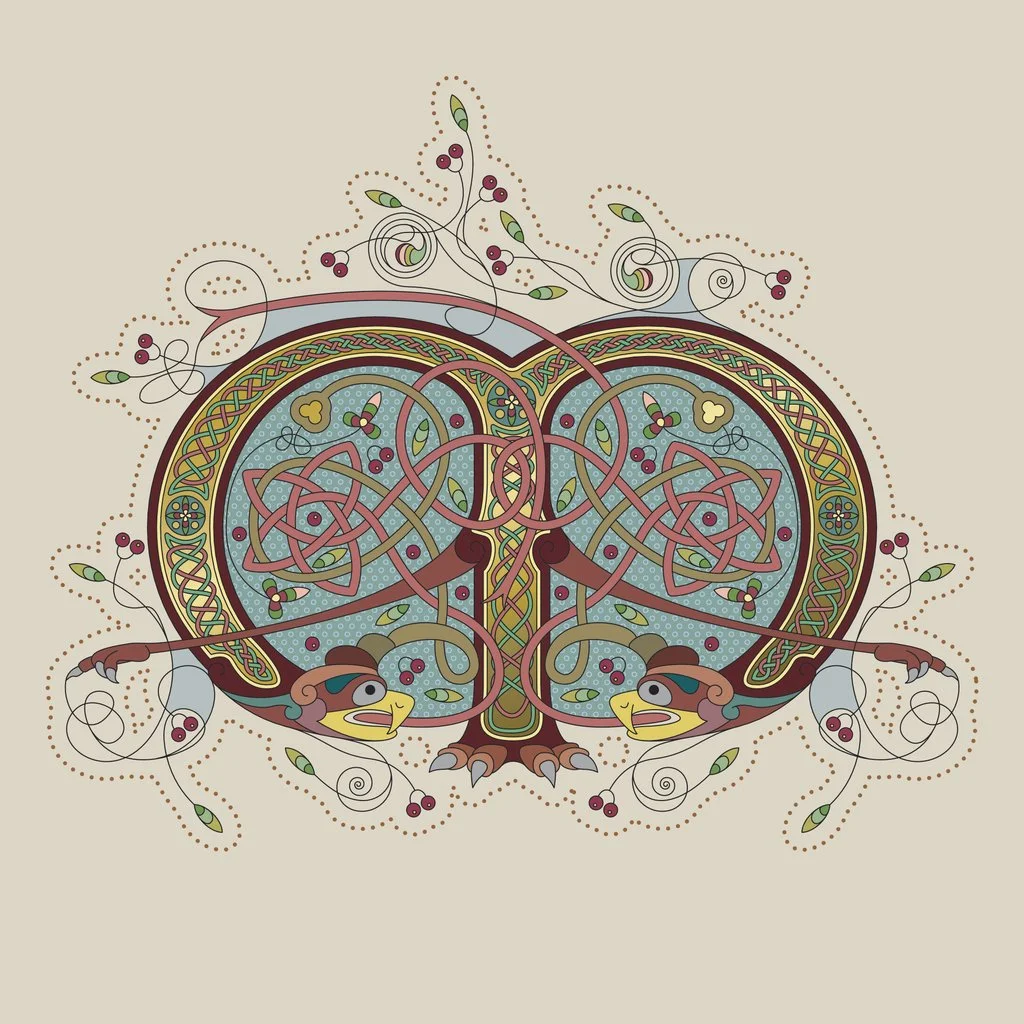
At the heart of Celtic design lies its potent symbolism. Take the timeless Celtic knot, endlessly looping back on itself—a metaphor for eternity, interconnectedness, and the cyclical nature of life. Spirals evoke growth and transformation, while depictions of animals like horses, birds, and serpents celebrate the harmony between humanity and nature. Every pattern holds a message, encouraging us to reflect on our own journeys of purpose and evolution.
Materials and Techniques
In its earliest forms, Celtic design revealed itself through materials as grounded as the earth and as precious as gold. The Celts demonstrated exceptional artistry in metalwork, carving ornate designs onto swords, brooches, and jewellery. Stone was another canvas for their creativity, with monolithic carvings bearing intricate patterns and sacred symbols. Techniques like repoussé metalwork and fine filigree pushed the boundaries of craftsmanship, creating not just objects, but heirlooms that carried meaning across generations.
Styles and Variations
Celtic art, much like the lands that birthed it, boasts immense diversity. The La Tène style, named after a region in Switzerland, reflects early Celtic aesthetics with flowing, organic curves. Meanwhile, Insular art—characterised by illuminated manuscripts like the Book of Kells—emerges as the crowning glory of medieval Celtic design. Together, these styles showcase not only artistic variation but the adaptability of the Celtic spirit to different historical and cultural contexts.
Celtic Design - Medieval Period
The medieval era was the golden age of Celtic design, a time when creativity flourished especially through illuminated manuscripts. Picture the intricate pages of the Book of Kells—a masterpiece combining bold geometry, vibrant colours, and arresting detail to tell sacred stories. Metalworkers crafted ornate reliquaries and chalices for religious ceremonies, their designs radiating reverence and precision. During this time, Celtic art expanded its horizons, becoming a central part of spiritual expression.
Renaissance and Revival
The allure of Celtic design never vanished, but it did ebb and flow with the tides of history. Enter the Celtic Revival of the 19th century—a cultural movement that sought to rekindle pride in Celtic heritage and identity, particularly in Ireland and Scotland. Artists, writers, and craftspeople breathed new life into ancient designs, adapting them to suit contemporary tastes while preserving their homage to tradition.
Modern Interpretations
Celtic design today is a vivid illustration of its timeless appeal. From tattoo artistry that immortalises knotwork on skin to fashion designers who weave Celtic motifs into textiles, the legacy of this art form is alive and thriving. Modern interpretations infuse age-old designs with fresh innovation, making Celtic art accessible everywhere—from high couture runways to the walls of modern homes. Artists today honour the past by blending it with the aesthetic language of the present.
Celtic design is more than art; it is a bridge to identity and unity. For those of Celtic heritage, it serves as a proud reminder of their roots and inspires others to celebrate their own cultural histories in unique ways. Beyond its cultural significance, Celtic design encourages us to think deeper about the interconnectedness of human experience—the knots we tie, the circles we close, and the narratives we share.
The enduring legacy of Celtic motifs in contemporary design reminds us that history is not confined to the past; it is an active force, creatively shaping our future.
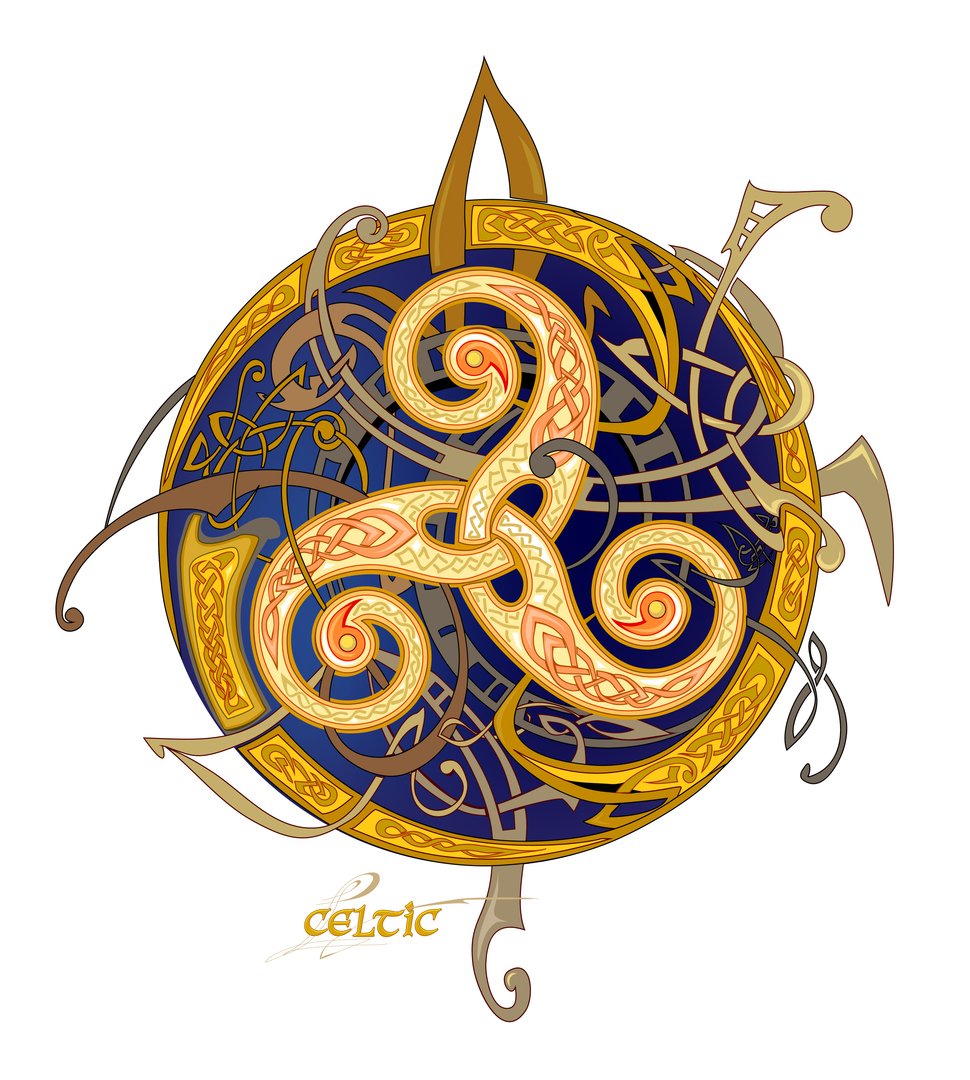
Modern Day Celtic Art - Natalja Cernecka (Credit)
My art journey
The first design I am looking to perfect is possibly one of the most loved and used worldwide ‘The Trinity Knot’
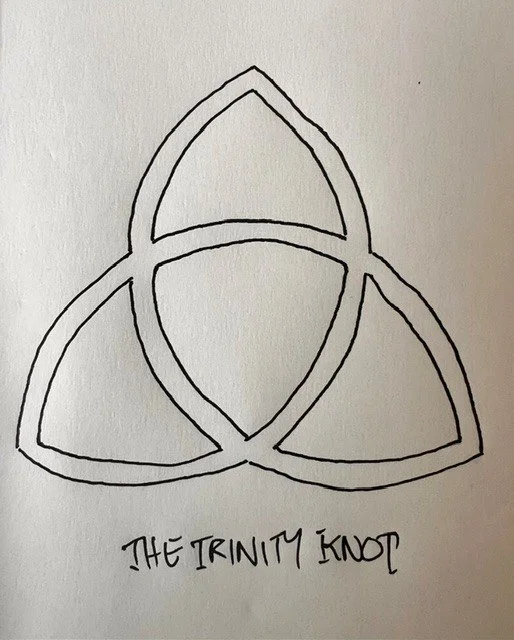
My first sketch - was a little wonky.
In the intricate tapestry of symbols that have stood the test of time, few are as elegantly profound as the Trinity Knot. Also known as the Triquetra, this Celtic icon serves as a guide for those of us on a path toward personal and professional enlightenment.
Unity & Diversity
At its core, the Trinity Knot is a triumvirate: three interconnected arcs that create a seamless, unbroken line. This symbol, which has found its place in both pagan and Christian contexts, represents unity in diversity. Much like the symbiotic relationships that imbue ecosystems with strength and resilience, the Trinity Knot reminds us that true power lies in integration rather than isolation. In this, the connection in cultural awareness between my Māori whanau and my blood relatives is pretty clear.
In the professional realm, this translates into the cultivation of diverse teams where the unique strengths and perspectives of each member weave together to form a robust and adaptable entity. Embrace the Trinity Knot's message: seek out varied skill sets, encourage differing viewpoints, and watch as this diversity fortifies your collective endeavours.
Balance and Continuity
The seamless flow of the Trinity Knot's curves mirrors the ideal cycle of career development: continuous, holistic, and balanced growth. Each point of the knot may represent complementary virtues necessary for professional success: perhaps creativity, analytical skills, and emotional intelligence. Each one relies on and enhances the others, creating a harmonious and dynamic equilibrium.
This balance is not static but is a perpetual motion that drives us forward. In your career, maintain this motion by regularly investing in your personal development, seeking feedback, and adapting to new challenges.
And for me, at sixty-three, it ensures I should not be scared of this new journey and forge ahead using the skills and knowledge I have gained and my desire and ability to learn more.
Past, Present, and Future: The Trinity of Time
Interpreting the Trinity Knot through the lens of time invites us to integrate our past experiences with our present actions to shape our future favourably. This holistic approach ensures that lessons learned are not forgotten, achievements are built upon, and future goals are set with wisdom and foresight.
Reflect on your past to understand the roots of your professional identity, engage deeply with your current projects, and strategically plan for future growth. This temporal trinity guides you to a career path where each step is thoughtful, intentional, and informed by a rich tapestry of experiences.
Other meanings of the trinity knot
Symbol for the Mother, Maiden and Crone
The Irish Love Knot
As a gift, it offers longevity of life to the receiver
Symbol for Life, Death and Rebirth
In marriage, the husband vows to love, honour and protect
Moon phases - past, present and future
Known as a representation of ancient culture for both the Irish and Scottish, with strong connections in the regions where the Celts roamed.
I hope you enjoyed this first look at Celtic Design and Art and are keen to follow me on my artistic and learning journey. My next blog will be out soon and will feature two to three other Celtic designs, but not until I have nailed down this beautiful, meaningful trinity.
Thanks for reading my blog.
Tony Cutting
Colour Blind Artist and Writer.
